

AFM-sMIM Characterization of the Recombination-Enhancing Buffer Layer for Bipolar Degradation Free SiC MOSFETs|AFM-sMIM Characterization Study of Composite Enhanced Buffer Layers for Bipolar Degeneration-Free SiC MOSFETs
Rosine Coq Germanicus, Tanguy Phulpin, Kimmo Niskanen, Alain Michez, Ulrike Lüders
Abstract
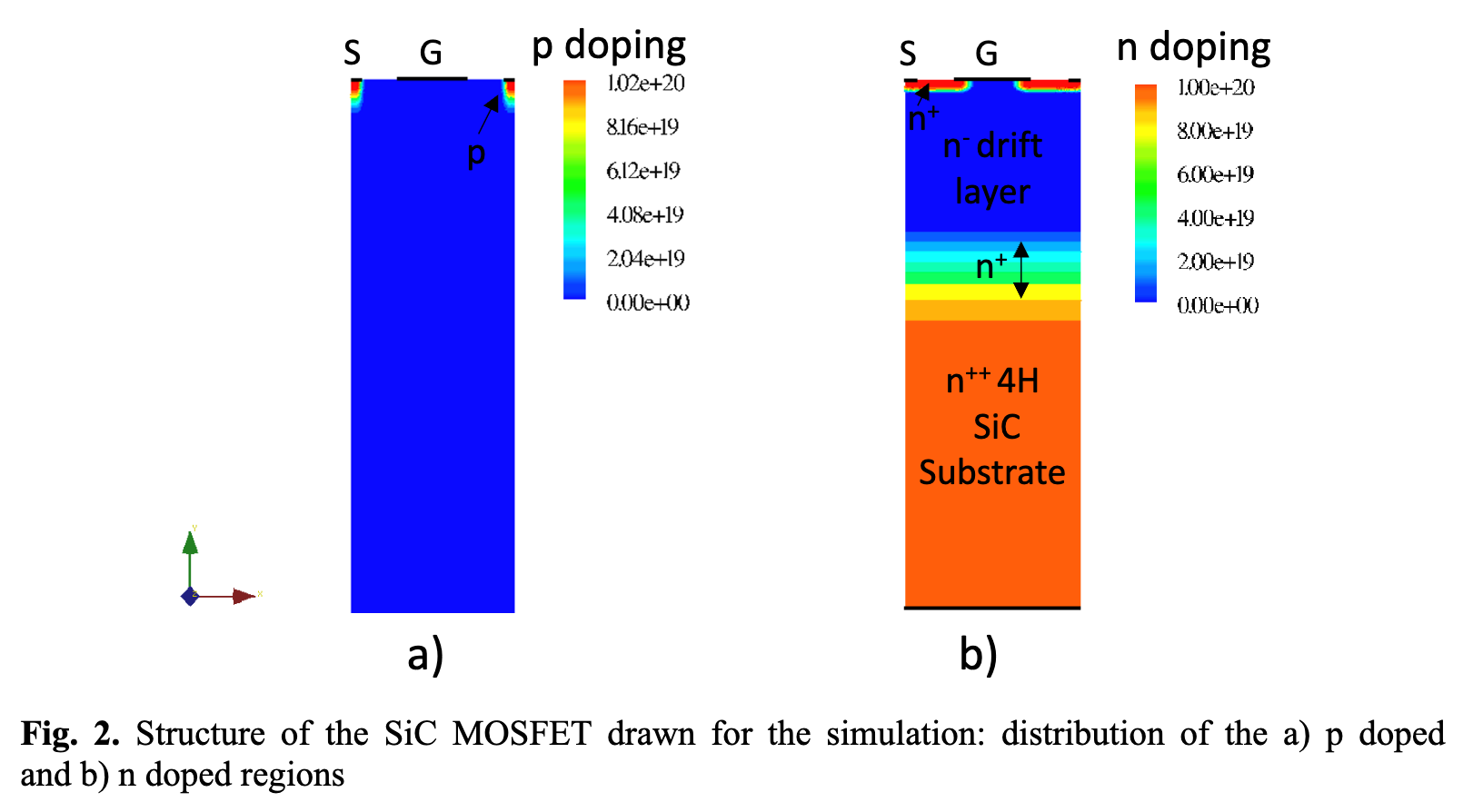
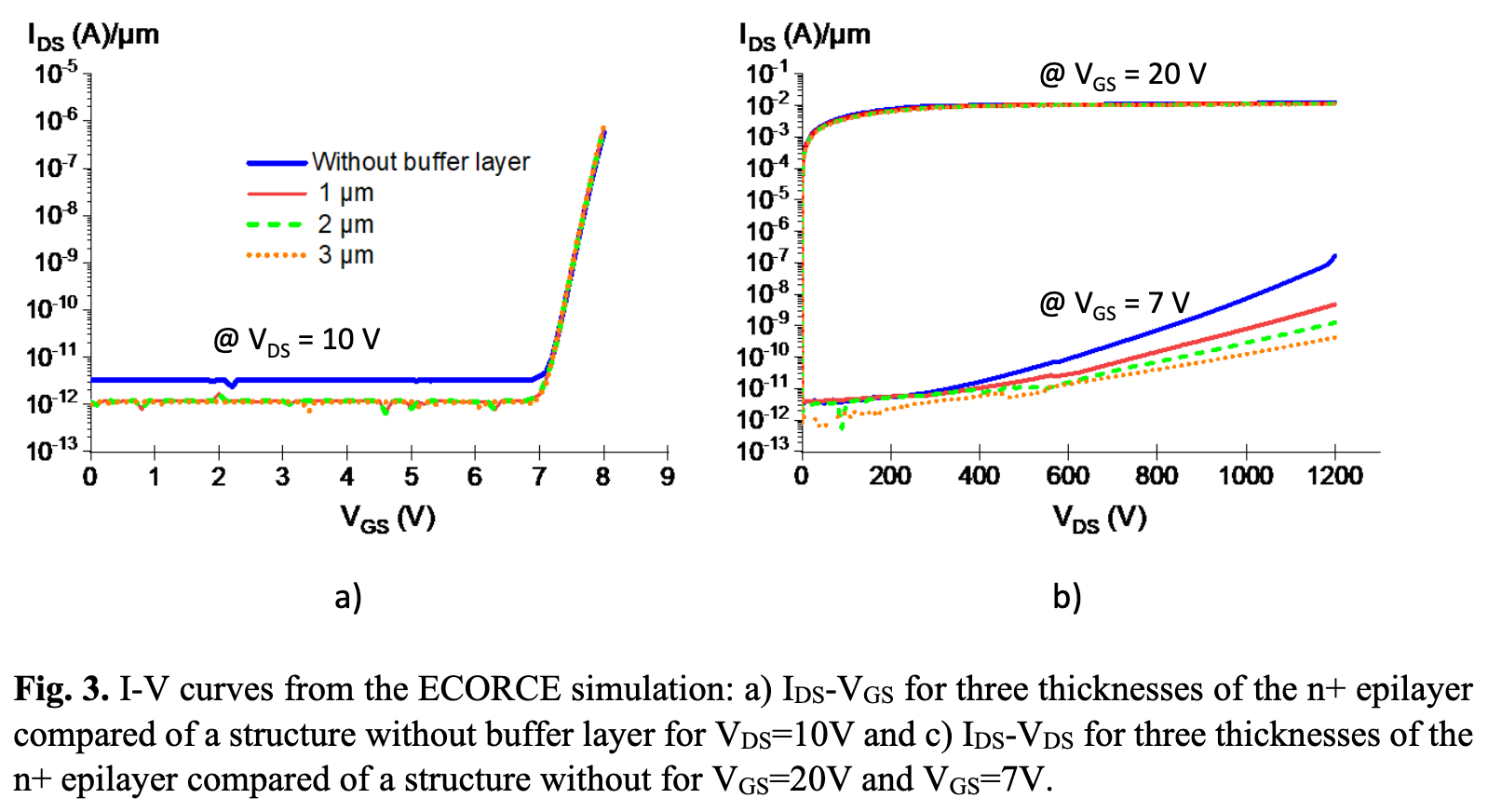
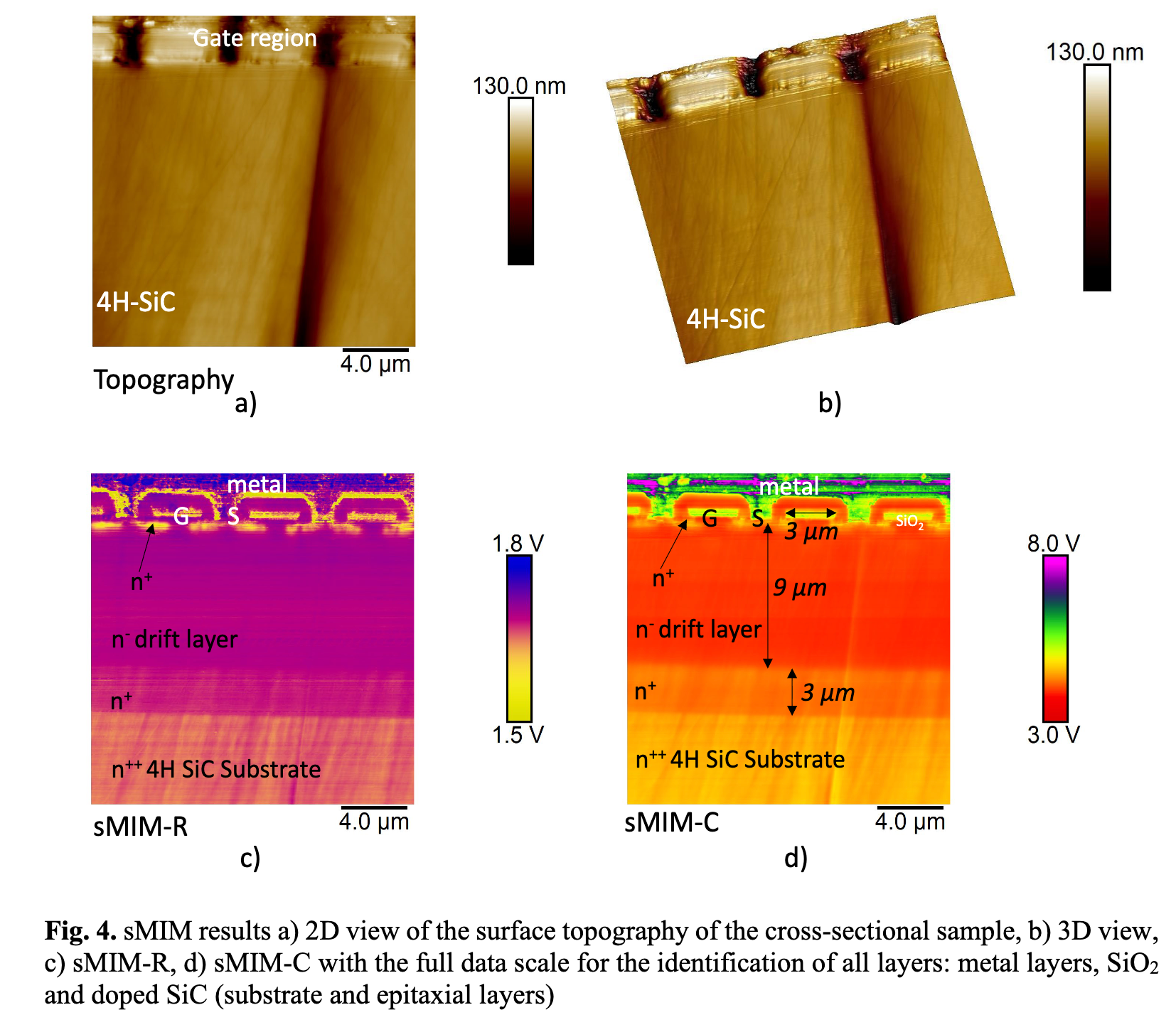
Due to the expansion of defects like single Shockley-type Stacking Faults inside the SiC epitaxialdrift layer, during high current stress, classical SiC MOSFETs can be victims of the degradation oftheir electrical characteristics. The introduction of an epitaxial SiC buffer layer between the substrateand the n- drift epilayer, called recombination-enhancing buffer layer, was shown to avoid thisdegradation. In this paper, TCAD simulations of the electrical behavior of such a commercial SiCMOSFET device with varying buffer layer thickness are studied, indicating only small modificationsof the electrical characteristics. These simulations are combined with the characterization of the localelectrical properties using an AFM-sMIM technique, allowing to determine the real thickness of thedifferent layers of the device. These measurements highlight an inhomogeneous conductivity in theSiC substrate, being probably compensated by the introduction of the SiC buffer layer.
Summary of the paper
This paper investigates a recombination-enhancing buffer layer developed for bipolar-degradation-free SiC MOSFETs and evaluates its local electrical behavior by means of AFM-based scanning microwave impedance microscopy (AFM-sMIM).
The study combines surface topography with nanoscale electrical imaging, allowing the authors to examine how the buffer layer and adjacent semiconductor regions differ in their local microwave impedance response.
In the measurements, the analysis relies on both sMIM-R and sMIM-C signals, which provide complementary information related to local resistive and capacitive characteristics.
By correlating these signals with specific regions in the device structure, the work aims to clarify whether the engineered buffer layer exhibits the intended electrical function that supports improved SiC MOSFET performance.
The significance of the method is that sMIM can probe electrical contrast at the nanoscale in semiconductor materials and devices, making it useful for mapping local conductivity or permittivity variations that are difficult to resolve with conventional bulk measurements.
For this reason, the paper is valuable not only as a characterization study of a SiC power device structure, but also as an example of how sMIM can support semiconductor process verification, functional layer assessment, and reliability-oriented device analysis.
----------
technical value
This paper focuses on the local electrical characterization of the "enhanced composite buffer layer" in SiC MOSFET, with the goal of serving device design and analysis "without bipolar degradation".
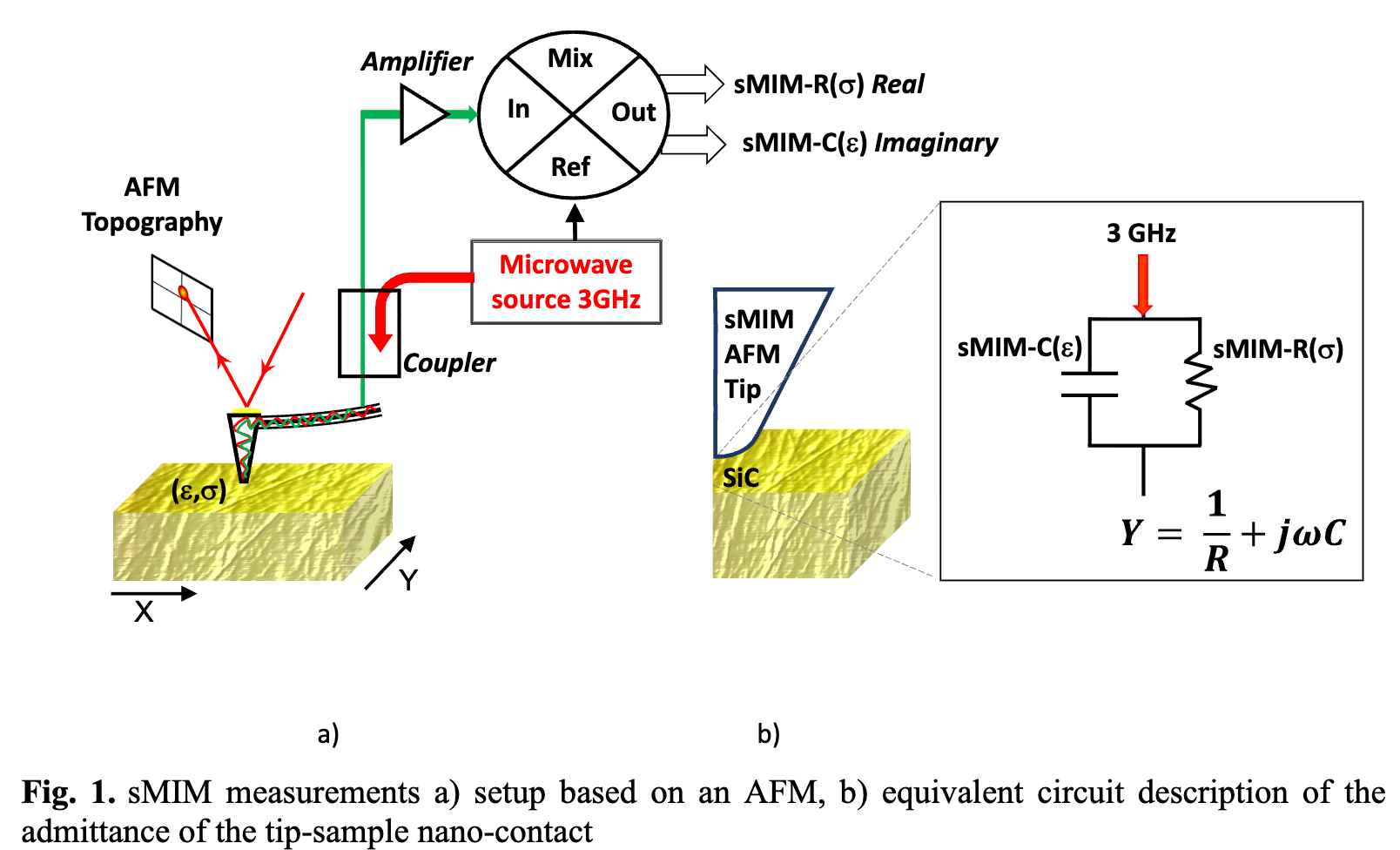
In the study, AFM-sMIM, which is a scanning microwave impedance microscope, was used to simultaneously read the local electrical signals while acquiring the surface topography, and focused on the use of two types of responses, sMIM-R and sMIM-C.
From a methodological point of view, the core role of SMIM here is to directly "image" the local electrical differences in the buffer layer and its surrounding semiconductor areas, thereby helping researchers determine whether the functional layer has achieved the expected electrical design.
In terms of technical significance, sMIM can simultaneously measure local responses related to capacitance and resistance, is suitable for conductors, semiconductors, and insulators, and is often used for doping distribution characterization and failure analysis in semiconductor technology.
Therefore, the value of applying sMIM to power semiconductor devices such as SiC MOSFETs is that it can not only see "what the structure looks like" but also "whether the local electrical state is correct", which is critical for buffer layer optimization, device reliability analysis and process verification.
The significance of this technology can be summarized as follows: SMIM provides nanoscale local electrical evidence for functional layers in SiC power devices, moving device design further from "structural judgment" to "electrical demonstration."
----------
Original link:https://www.scientific.net/SSP.361.85

